
Shogun 2 Economy Guide: Food, Taxes and Steady Income
Build a resilient Shogun 2 Sengoku economy: protect food surplus, manage tax and upkeep, and prepare for trade disruption before Realm Divide.
FAQ
Why did upgrading a castle cause a food shortage?
Should I upgrade every market immediately?
Does Fall of the Samurai use this food strategy?
Separate cash, income and food
A large treasury does not mean a healthy economy. Cash pays an immediate construction or recruitment bill; recurring income pays the army you keep. Food is a separate empire resource. You can have money left over and still damage your campaign by allowing food consumption to overtake supply.
Start by opening the finance and province panels. If another unit would turn recurring income negative, decide what that unit will actually accomplish. A second army that protects a vulnerable coastline may be necessary; a second army waiting behind the first often is not.
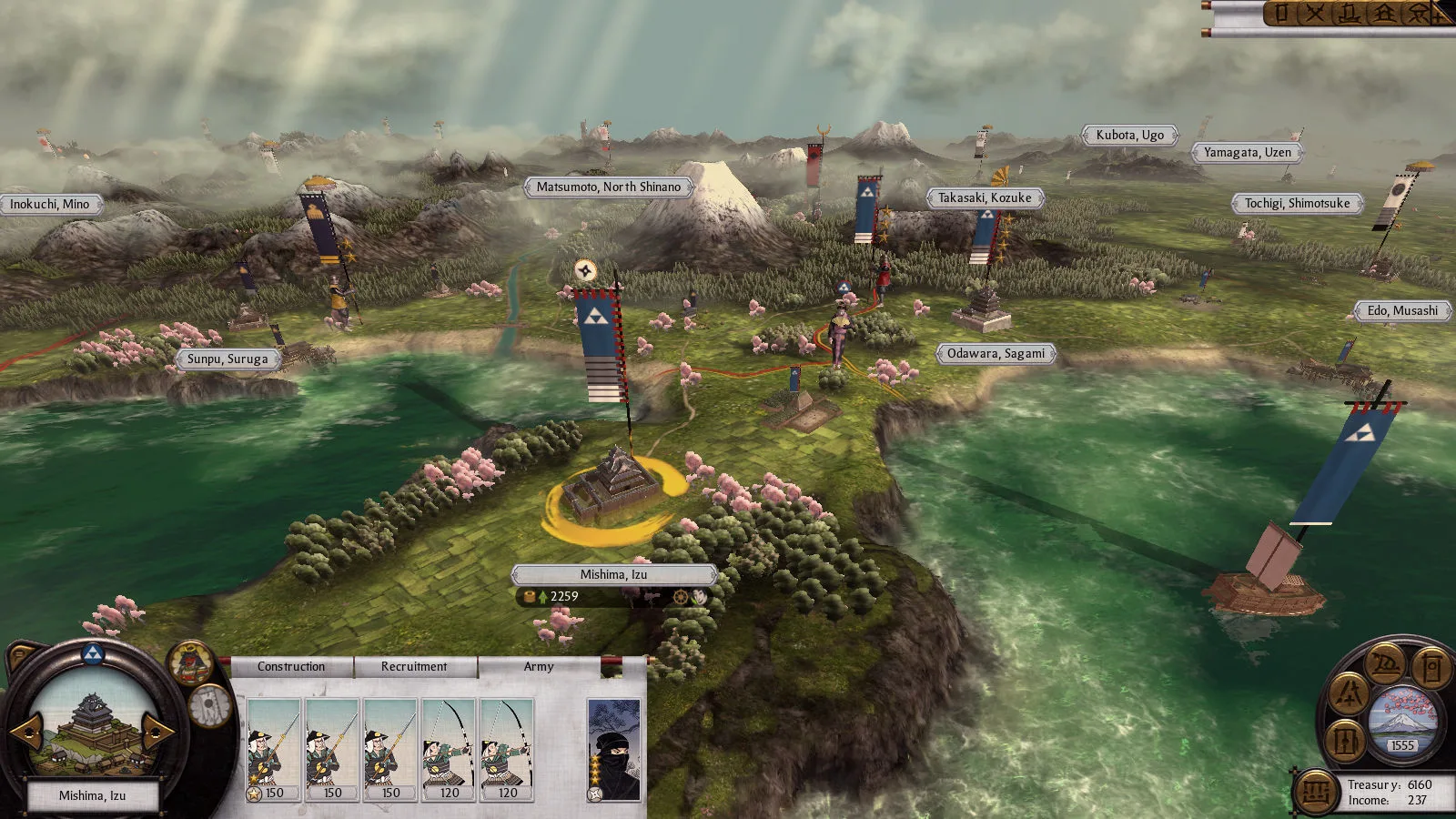
Read the income display alongside the army cards. The image is finance context, not evidence of an optimal recruitment count.
Spend food deliberately
Farm development supplies food in the classic Sengoku campaign. Castles and higher market tiers can consume it. Food surplus also supports town growth, so spending the final spare point affects more than whether the shortage warning appears.
Before an upgrade, read its current tooltip and compare the new consumption with your clan’s balance. Leave a buffer if you are about to conquer: inherited buildings may change that balance. If food has already gone negative, postpone optional consumption and look for a farm upgrade you can afford. Do not solve an urgent military crisis by starting several construction projects that finish too late to help.
A castle upgrade can be valuable in a recruitment province or a key defensive position. It is less persuasive in every quiet town just because the button is available. The beginner campaign guide helps connect building choices to your next frontier.
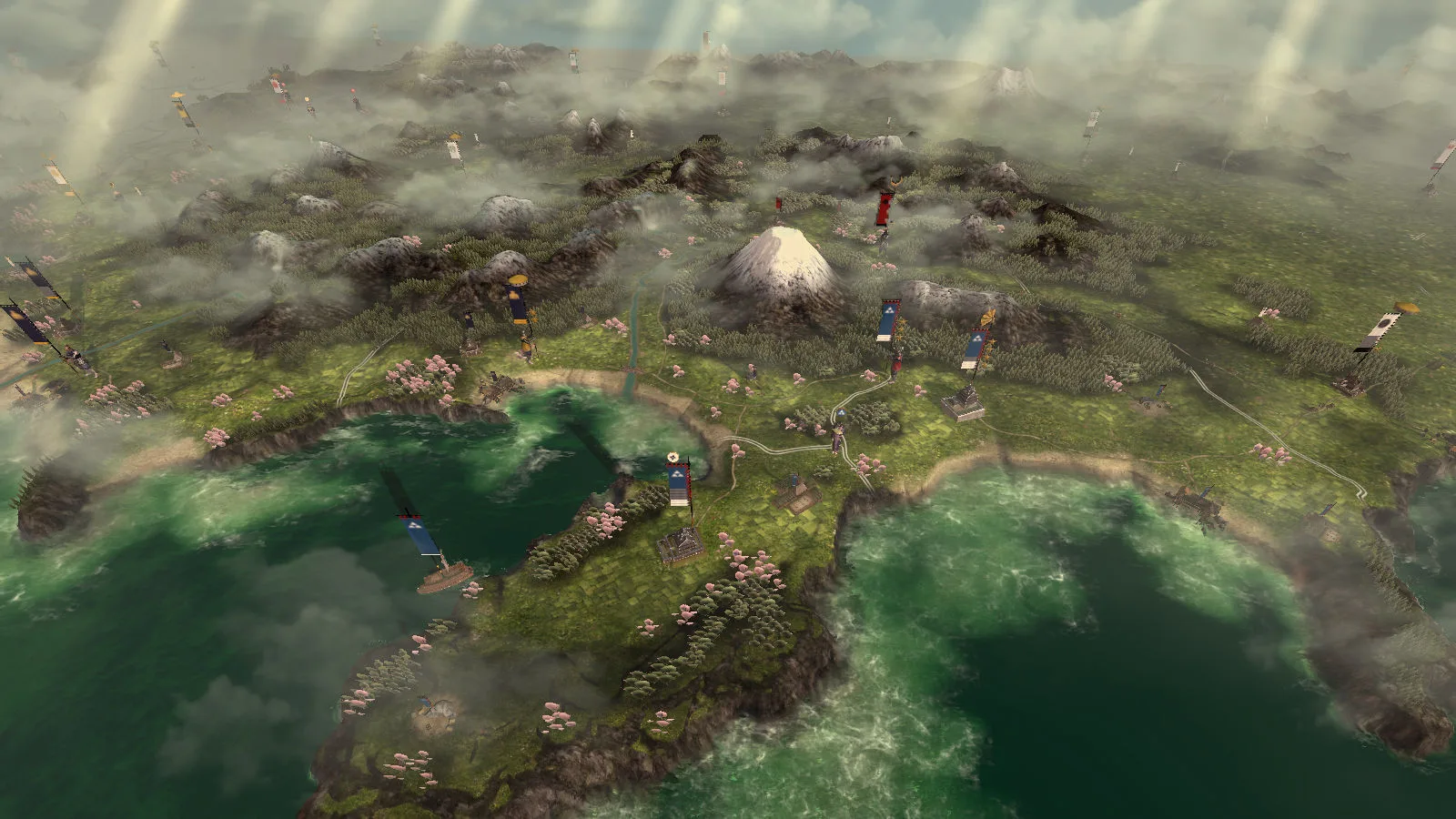
Plan province roles around the frontier and routes. This scene shows settlements and movement geography, not a particular building upgrade.
Choose an investment for a reason
| Situation | Useful question before spending |
|---|---|
| Fertile farming province | Does the farm improve food and income enough to justify its cost now? |
| Quiet rear province | Can this become a dependable source of tax income without additional troops? |
| Recruitment center | Does a military building unlock a unit the current army actually needs? |
| Exposed port | Can you protect the sea route before relying on its income? |
| Newly captured settlement | Will unrest or damaged buildings prevent the expected return? |
Tax policy has a public-order cost. Avoid raising tax merely because the treasury looks low without checking which towns will become unstable. A rebellion can erase the short-term gain and pull your army away from the war you intended to fight.
Treat trade as helpful, fragile income
Trade agreements and maritime routes can strengthen your finances. Their reliability depends on diplomacy, ports and naval access. Check which income disappears if a partner becomes hostile or your port is blockaded. A war plan funded entirely by the partner you intend to attack needs revision.
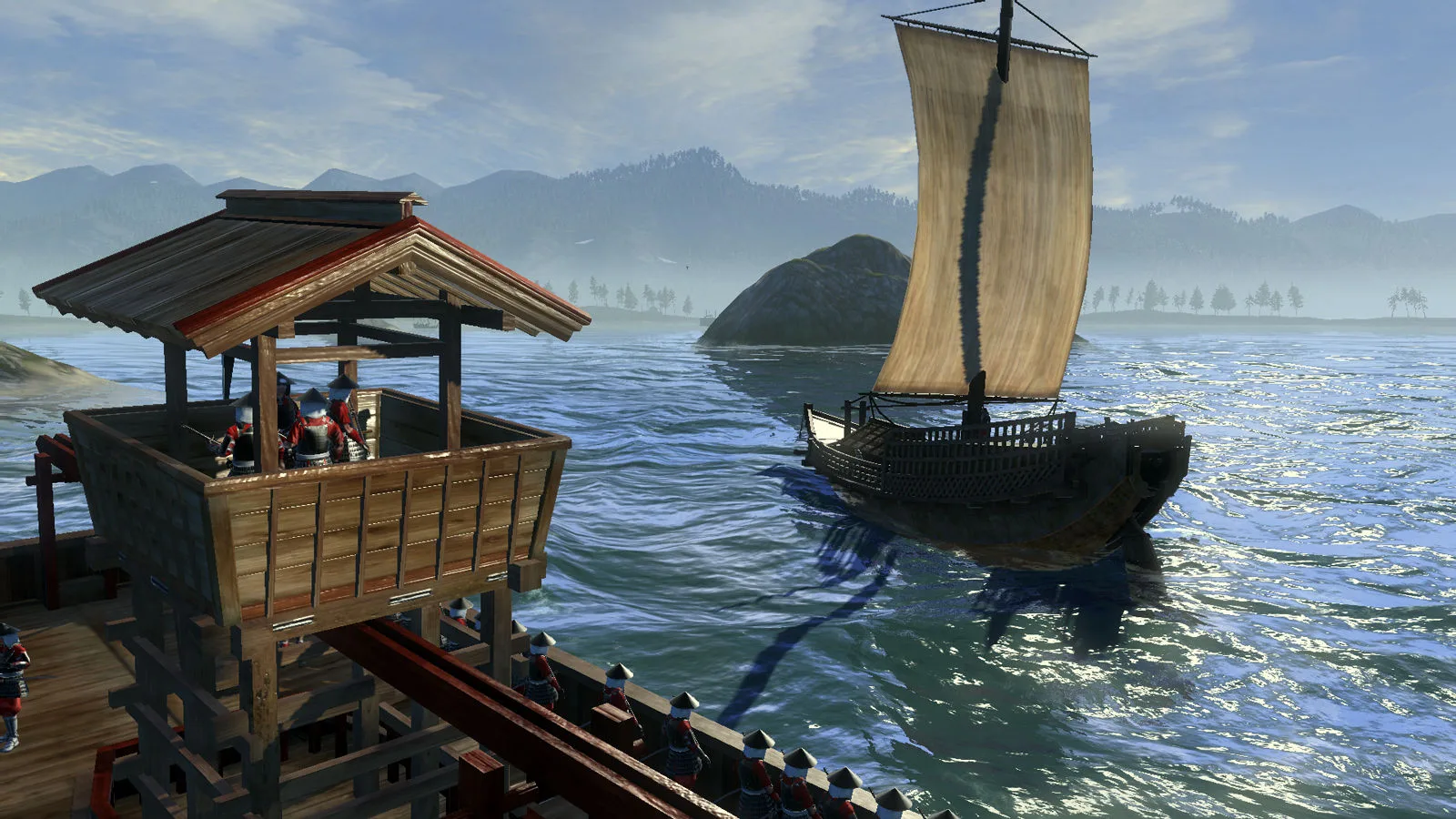
A harbor needs protection as well as investment. This picture is naval context; it does not show a trade-node interface or a completed agreement.
As fame rises, make a Realm Divide plan using a budget that tolerates trade loss. Replenish the force you already own before adding expensive troops that need several turns to reach it. An affordable army composition keeps expansion and construction from competing for the same final coins.
Scope and sources
These are classic Sengoku priorities, not a promise of a fixed income formula or a universal build order. The original food-shortage encyclopedia entry explains food supply and consumption. The classic manual provides campaign-management context. Use the Fall of the Samurai guide for its separate economy and modernization decisions.
Classic images: Creative Assembly / SEGA via the official Steam store.
Related Articles
guides
Shogun 2 Beginner Guide: Your First Campaign Opening
Start your first Shogun 2 campaign with a manageable clan, affordable army and food surplus. Learn when to expand and how Complete Edition differs.
guides
Shogun 2 Complete Edition: Price, Discount & Is It Worth It?
Compare Shogun 2 Complete Edition with the original: price, Steam loyalty discount, all three campaigns, new features and mod compatibility.
guides
Shogun 2 Fall of the Samurai Guide: Guns and Reform
Learn Fall of the Samurai campaign basics: reliable gun lines, measured modernization, naval threats and allegiance choices before the endgame.
Was this helpful?
Thanks for the feedback!