
Shogun 2 Rise of the Samurai Guide: Clans and Agents
Start Rise of the Samurai with a clear family strategy, useful agents and an affordable levy army. Understand allegiance before committing to conquest.
FAQ
What makes Rise of the Samurai different from the main campaign?
Can a Junsatsushi take a province without fighting?
Is Rise of the Samurai included in Complete Edition?
Start with the family, then the frontier
Rise of the Samurai is a separate campaign, not the main game with a few units removed. Its setting precedes Sengoku Japan, and the classic selection offers six major clans associated with the Taira, Minamoto and Fujiwara families. Read the chosen clan’s traits, neighbors and objectives before planning the first war.
For a learning campaign, choose a position whose borders you can defend without guessing. A nearby family ally can help, but you still need to inspect actual relations and military access. Do not spend the whole opening budget on troops merely because several recruitment slots are available.
The beginner campaign checklist is useful for income, scouting and public order. Its Sengoku clan recommendations and unit instructions do not transfer automatically to this expansion.
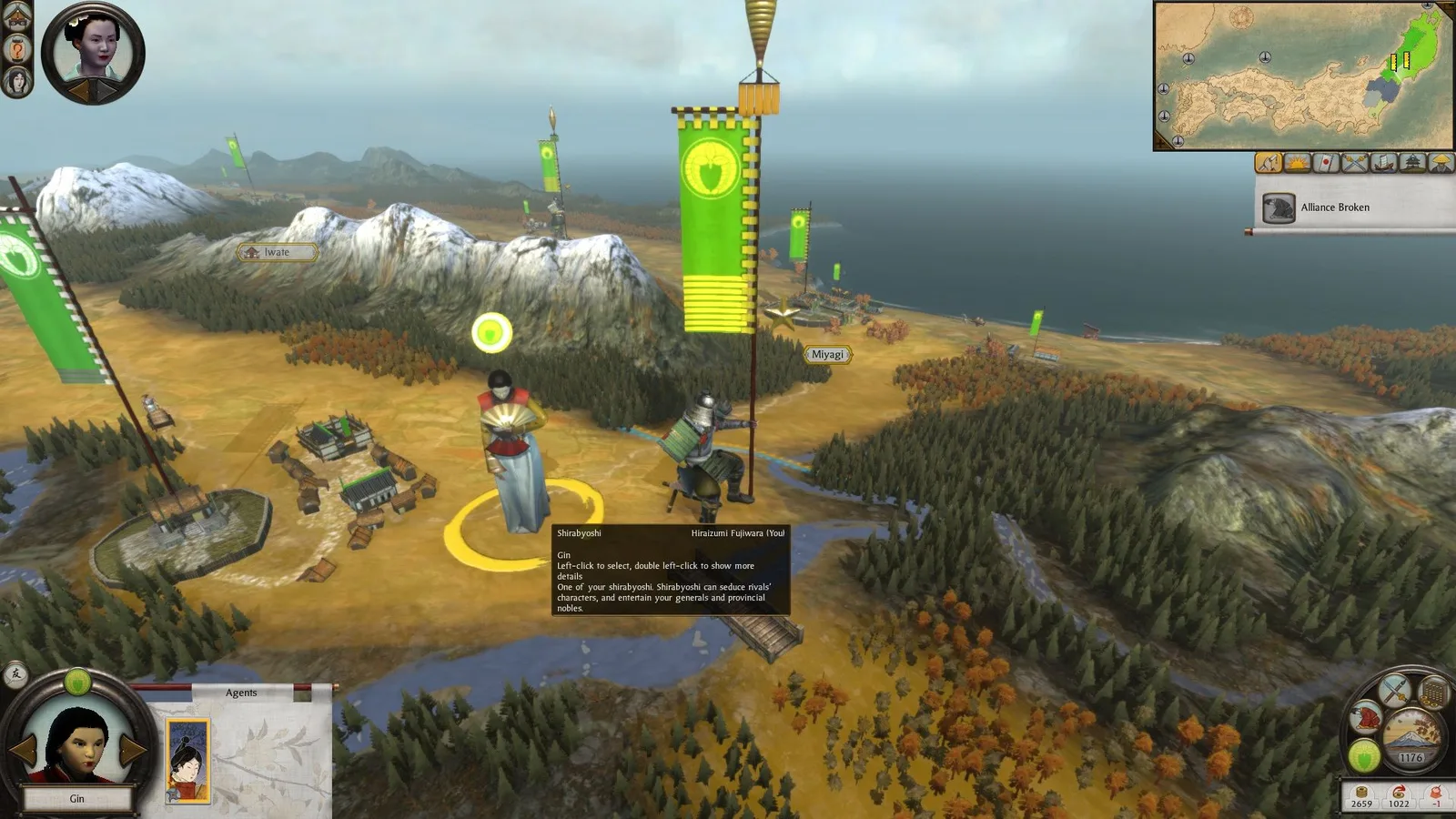
Classic Rise campaign map: use borders and routes to decide whether the next province is defensible.
Give agents a job before hiring more
The Junsatsushi is especially important because requesting allegiance can change how you expand. Open the target town’s panel and inspect the available action: eligibility, cost and success chance matter more than a blanket promise of peaceful conquest. Keep enough money for an army response if the attempt fails or the political situation changes.
The other agents support different tasks. A Monomi provides scouting and hostile actions; a Sou supports your cause and population management; a Shirabyoshi offers influence over characters and armies. Those are distinct roles. Sending every agent toward the same town without considering their action menus wastes both time and cash.
Before an agent moves, ask what information or result you need next turn. Scouting a route into an unknown province may be more valuable than attempting an expensive low-chance action. Check the town after any successful transfer rather than assuming its order, buildings and defense are already suitable for your plan.
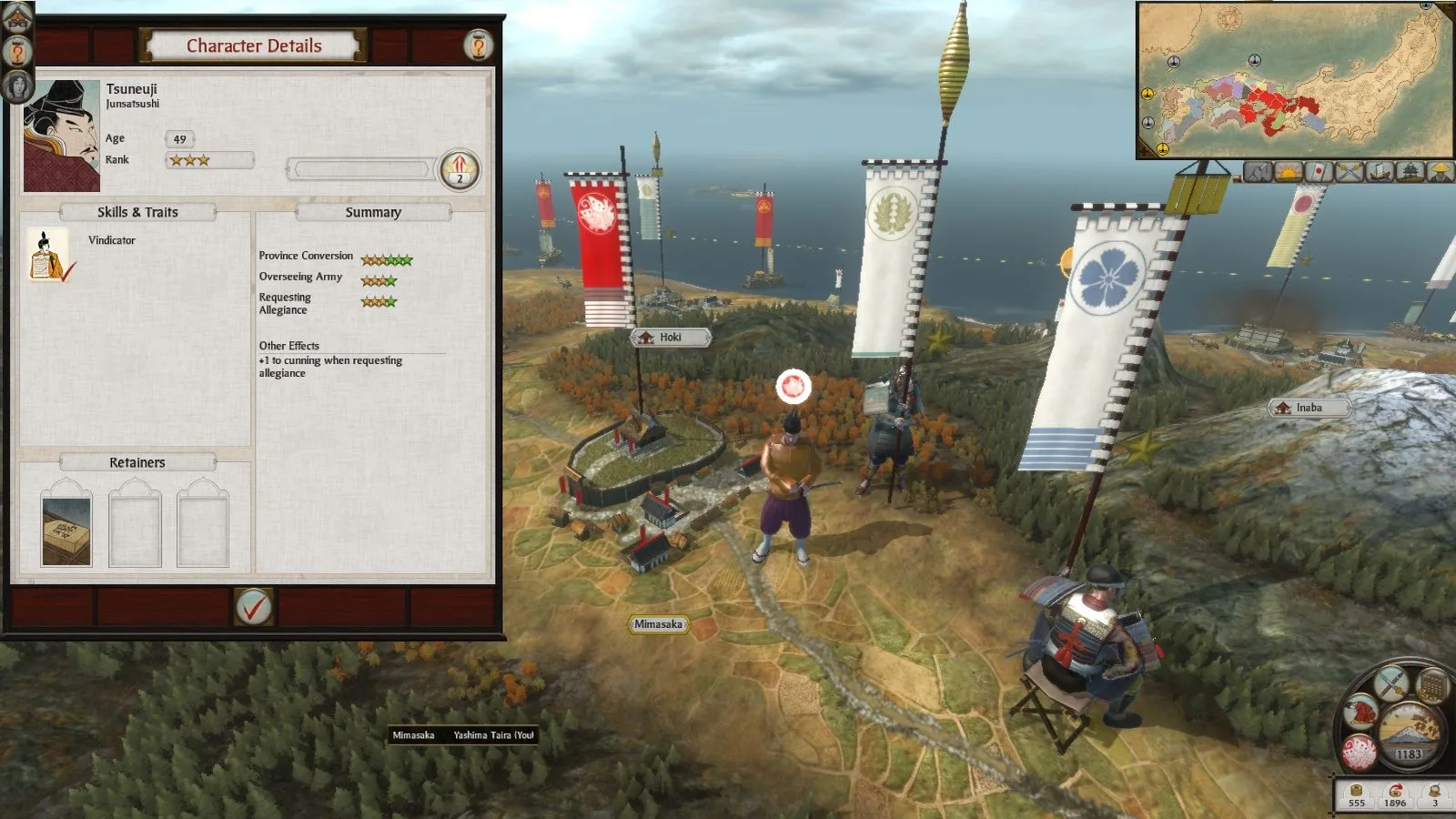
The classic Junsatsushi panel distinguishes his roles; it does not show a successful allegiance request.
Build a line the rest of the army can support
Levies are an affordable starting force, but affordability does not make them dependable in every fight. Keep their frontage manageable, protect their flanks and place the general where his support remains useful. When a unit begins to waver, a nearby reserve gives you a response other than sending the general into the gap.
Foot Samurai can contribute with both bows and swords. Treat that flexibility as a decision: shooting into a useful target and entering a melee are different assignments. Committing them too early can remove your ranged pressure and expose an expensive unit to unnecessary losses.
Use terrain and timing to create a favorable engagement. Let supporting missile troops shoot from a useful position, then move a reserve when the enemy is committed. An army role framework helps organize these decisions, but use Rise’s own unit cards rather than copying a Sengoku shopping list or expecting Yari Ashigaru abilities on levies.
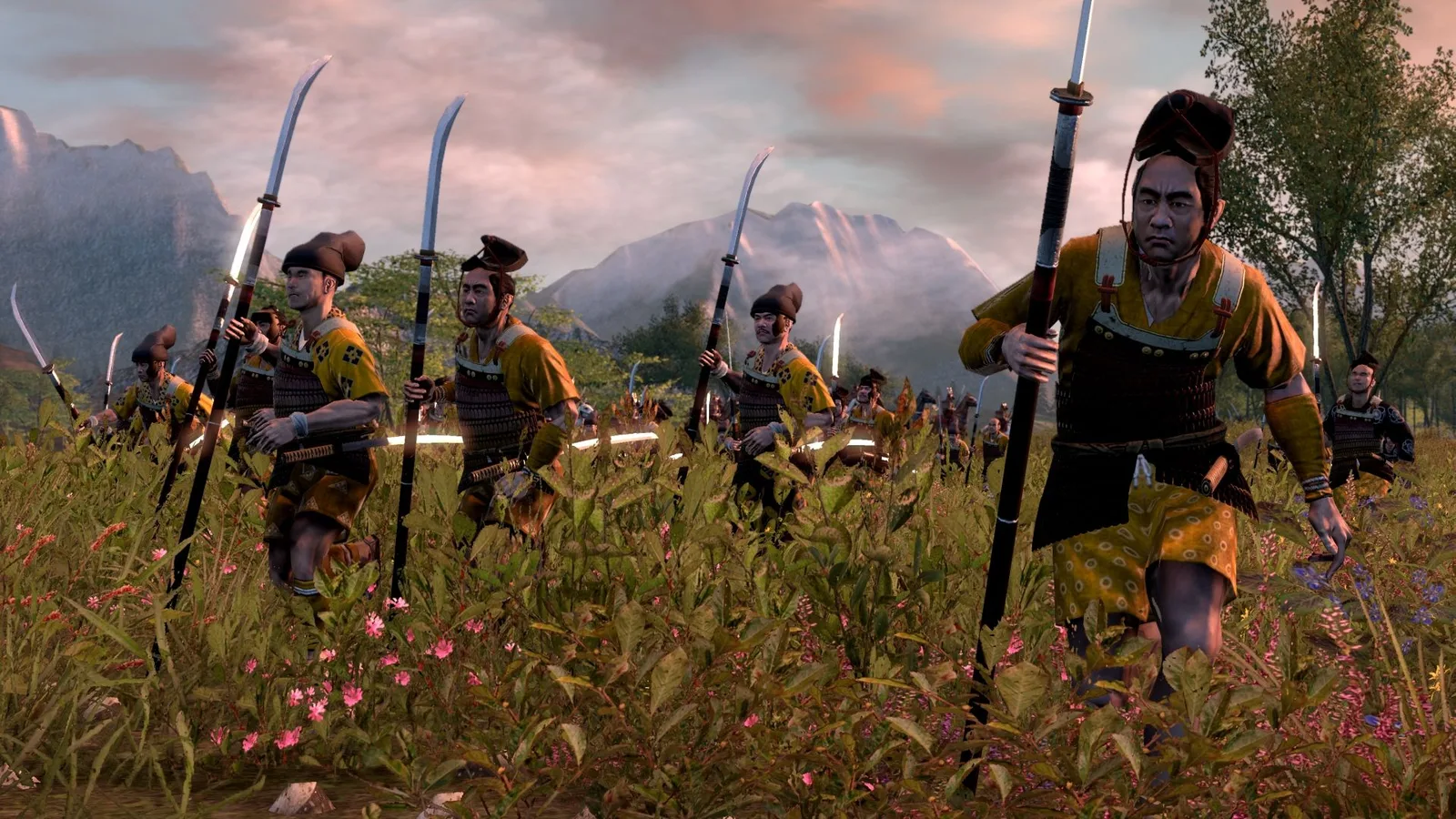
Classic Rise infantry illustrates the earlier roster; unit appearance alone does not establish its combat statistics.
Consolidate each gain
A new province should improve the campaign’s position. Check its allegiance, public order and income; decide whether your field army can leave. If it creates another exposed frontier, its apparent value may be lower than a quieter province closer to your main force.
Keep construction and recruitment coordinated. Investing in a better recruitment province makes sense only if you can afford the troops and move them where they are needed. Watch campaign fame and consult the in-game rules before applying the Sengoku Realm Divide guide to a different campaign’s exact behavior.
Complete Edition and source scope
The official Complete Edition FAQ confirms this campaign is included. Its official change list lists newly playable Rise minor factions. Classic trait and opening advice should be checked against your selected edition, not described as a new-build playtest.
Campaign and agent references: official Rise Steam description and official campaign overview. Compare the later gunpowder setting in Fall of the Samurai before choosing your campaign.
Screenshots: Creative Assembly / SEGA via the official Rise Steam store. These show the original expansion, not Complete Edition.
Related Articles
guides
Shogun 2 Beginner Guide: Your First Campaign Opening
Start your first Shogun 2 campaign with a manageable clan, affordable army and food surplus. Learn when to expand and how Complete Edition differs.
guides
Shogun 2 Complete Edition: Price, Discount & Is It Worth It?
Compare Shogun 2 Complete Edition with the original: price, Steam loyalty discount, all three campaigns, new features and mod compatibility.
guides
Shogun 2 Economy Guide: Food, Taxes and Steady Income
Build a resilient Shogun 2 Sengoku economy: protect food surplus, manage tax and upkeep, and prepare for trade disruption before Realm Divide.
Was this helpful?
Thanks for the feedback!